We are not selling you a machine. We are giving you a teacher — and showing you how to become a barista.
Nobody learns the piano on a concert grand. You learn on an honest instrument that makes every mistake audible — and that you may touch without reverence. Only afterwards does the question of the big instrument arise.
That is exactly what the GUDRUN is. It is not the cheap alternative to an expensive machine. It is something else: a teaching instrument. Built so that you learn the craft on it — not so that you can skip the craft.
That difference has consequences. A cheap machine wants you to notice nothing. A teacher wants you to notice everything: the wrong grind, the crooked tamp, the extraction that ran two seconds too long. It does not take the work off your hands — it makes the work visible.
Teaching means making cause and effect separable. Anyone who never knows whether it was the coffee, the temperature or themselves learns nothing — they guess. Three properties of the GUDRUN are therefore not data-sheet lines but teaching aids.
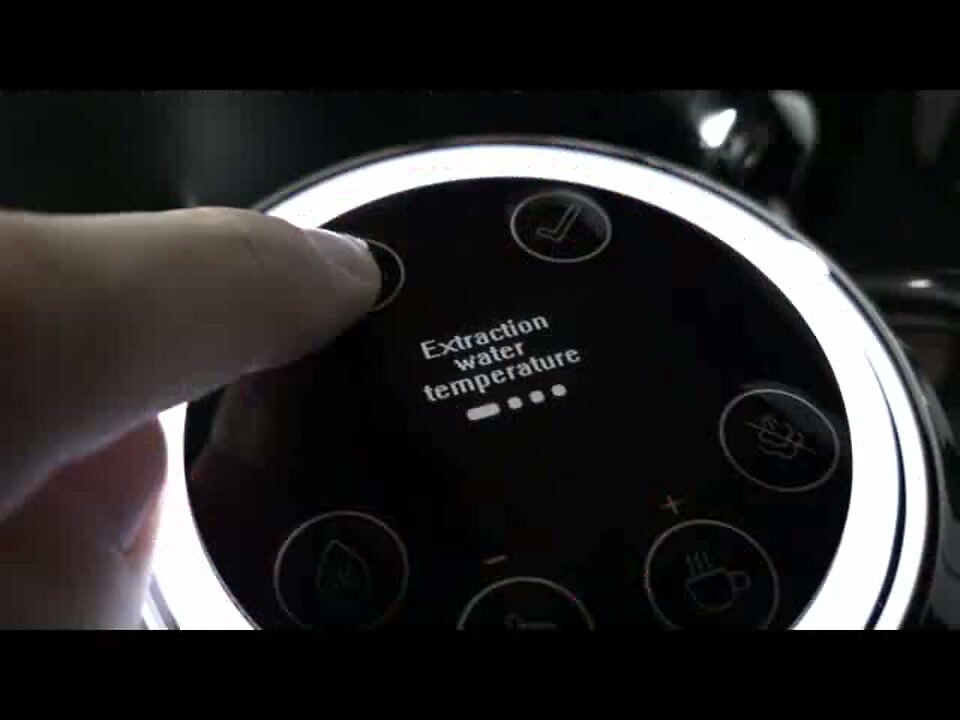
PID control does not just hold the brew temperature steady — it turns it into a figure you know and change deliberately. “Tastes sour” becomes “two degrees too cold”. That is the moment guessing turns into skill.
Two independent circuits mean espresso and milk never get in each other's way. You practise one thing while the other stays reliable. Learning only works when only one variable moves at a time.
Two freely assignable espresso buttons with programmable shot times hold on to what worked: the same handle, the same number of seconds, the same cup. The best espresso of your life is only worth something if you can make it again tomorrow. Repeatability is the difference between luck and craft.
Not a course you “get through”, but an order in which things make sense. A stage is only passed once you hit it three times in a row — not once by chance.
The first and most important lesson, and the only one you cannot buy. You learn to read the flow and to move the grinder to where the coffee wants to be.
Goal: 25 seconds, on purposeDistribute, tamp, keep it level. Unspectacular, decisive — half of all mistakes are made here, and a few weeks of practice settle it for good.
Goal: an even flowColour, pace, smell, taste — the espresso tells you while it runs what to change next time. From here on you correct instead of repeating.
Goal: being able to name the faultStretch, roll, hit the temperature. Foam that shines like wet paint is not talent — it is a movement you make forty times.
Goal: glossy, not foamyThe same cup on Tuesday as on Sunday. This is where experimenting ends and skill begins — and where your kitchen turns into a small, reliable bar.
Goal: three times the sameYou deviate from the rule on purpose, because you know why. From here on your espresso tastes of you and not of an instruction sheet. That is the finish.
Goal: being able to break the rulesThat is not a mishap, it is the point. A teacher you never outgrow has taught badly.
When that day comes — after one, two, five years — you may want a machine that no longer has to teach you anything and simply obeys. Heat exchanger, portafilter with a pedigree, three thousand euros. We will not stop you. On the contrary.
Because this machine is best bought where you can touch it, hear it and try it: at a good specialist dealer near you. We are not against the specialist trade, we work with it. What it gets from us is not a price war but customers who know what they are talking about.
Honestly: nothing at first. What we get is someone who learned the craft with us and passes it on. We prefer that to a quick sale to someone who puts the machine in a cupboard after four weeks. A brand that lives on the skill of its customers does not need to shout.
If one day you move up to the big machine, a teacher will be standing in your kitchen that is far from tired. Do not sell it. Pass it on — to your child, to the neighbour, to the colleague who always looks so enviously at your espresso.
One GUDRUN can teach the craft to three or four people. We would rather have one machine that has taught in three kitchens in turn than three machines standing in cupboards.
You learn. From the first sour sip to the cup you hit on purpose.
You outgrow it and fetch your big instrument — from the dealer you trust.
GUDRUN moves on and starts over. This time with you as the teacher beside it.
Espresso is a craft for tongue, ear and hand — and that is hard to convey through a screen. We are working on three bridges. What is written here is not finished; we write it down anyway, because we would rather build openly than act mysterious.
Two or three precisely described reference coffees, delivered by post. You brew the same bean with us and afterwards know what “right” tastes like on your tongue — instead of only reading about it.
Grinder, tamper, pump, steam wand — trained ears hear the mistake before they taste it. We record these sounds and turn them into ear training.
A map of the places where you can get your hands on espresso: specialist dealers, roasteries, workshops. Learn online, experience it offline — the two belong together, and neither replaces the other.
Then start with the teacher. You will find the technical data, the colours and the pre-order on the GUDRUN page — and if you would rather talk first: we are reachable, from one person to another.